Today more than ever before, security is a critical and demanding responsibility. Designing and managing the most effective system requires an exceptional combination of skills, knowledge, and experience. Here's why real-world expertise matters in modern security systems, and how to make sure your provider has what it takes to get the job done right.
> Need a better modern security system for your business? Contact the experts today
Time for an Upgrade? Why Technology-Driven Modern Security Systems Matter
The essential components that make up modern security systems do far more than protect against invasion and loss at a higher level than traditional, piecemeal systems. For instance, they help meet important regulatory standards, such as those imposed by HIPAA, Sarbanes-Oxley, PCI DSS, and others, helping eliminate the risk of fines and financial penalties.
Modern security systems can also drive operational efficiencies by integrating multiple management functions into one seamless, unified whole, requiring less labor while making maintenance easier and more affordable. And because these systems can reduce your risk of theft and loss, they can lower insurance premiums, too.
But the extensive benefits offered by modern security systems also come with the challenge of managing increasingly complex integrations. It takes more than a background in security to design and implement a centralized network that performs as more than the sum of its parts. It requires in-depth, across-the-board technical expertise and a wide range of real-world experience — and especially in these five key areas.
Expertise Required: 5 Most Essential Areas of Focus for Modern Security Systems
1: Expertise in Initial Assessment
Because each system must be customized to meet the specific needs and situation of each business it serves, the process of building a modern security system should always begin with an expert and thorough assessment of your operations and environment.
What type of space needs to be protected? Is it retail, corporate, or manufacturing? How does usage change from day to night? What’s the layout look like, how old are the buildings, and what materials were they built with? What high-value assets need to be protected? How many entry points are there? Who needs access? What regulations apply? Is it in a high-crime area? And what are your specific priorities — loss prevention? Employee safety? Regulatory compliance?
All these answers (and more) combine to provide your initial security assessment, and the best service providers will have the expertise to quickly understand the implications of each piece of information and assemble them into one functional design.
2: Expertise in Security Components
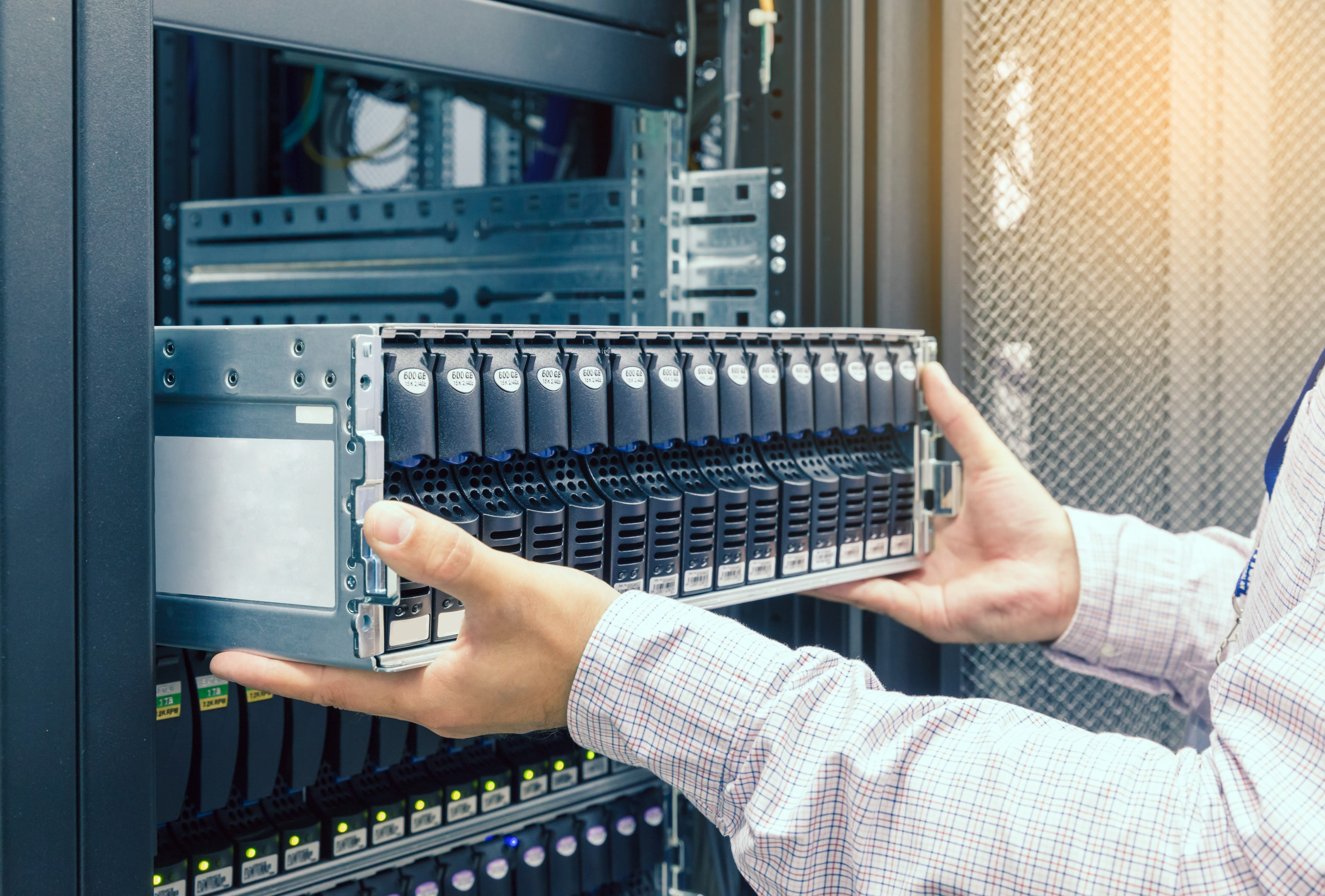
From basic video monitoring to automated alarm systems and biometric access control, effective security consists of a series of interlocking components. Identifying, sourcing, installing, and managing this competitive technology requires advanced expertise, as well as access to the latest solutions. The ability to deliver fully integrated systems tailored to your company's real-world need provides teams and project leaders with greater confidence.
- Deep dive: Discover the 10 essential components of modern security systems
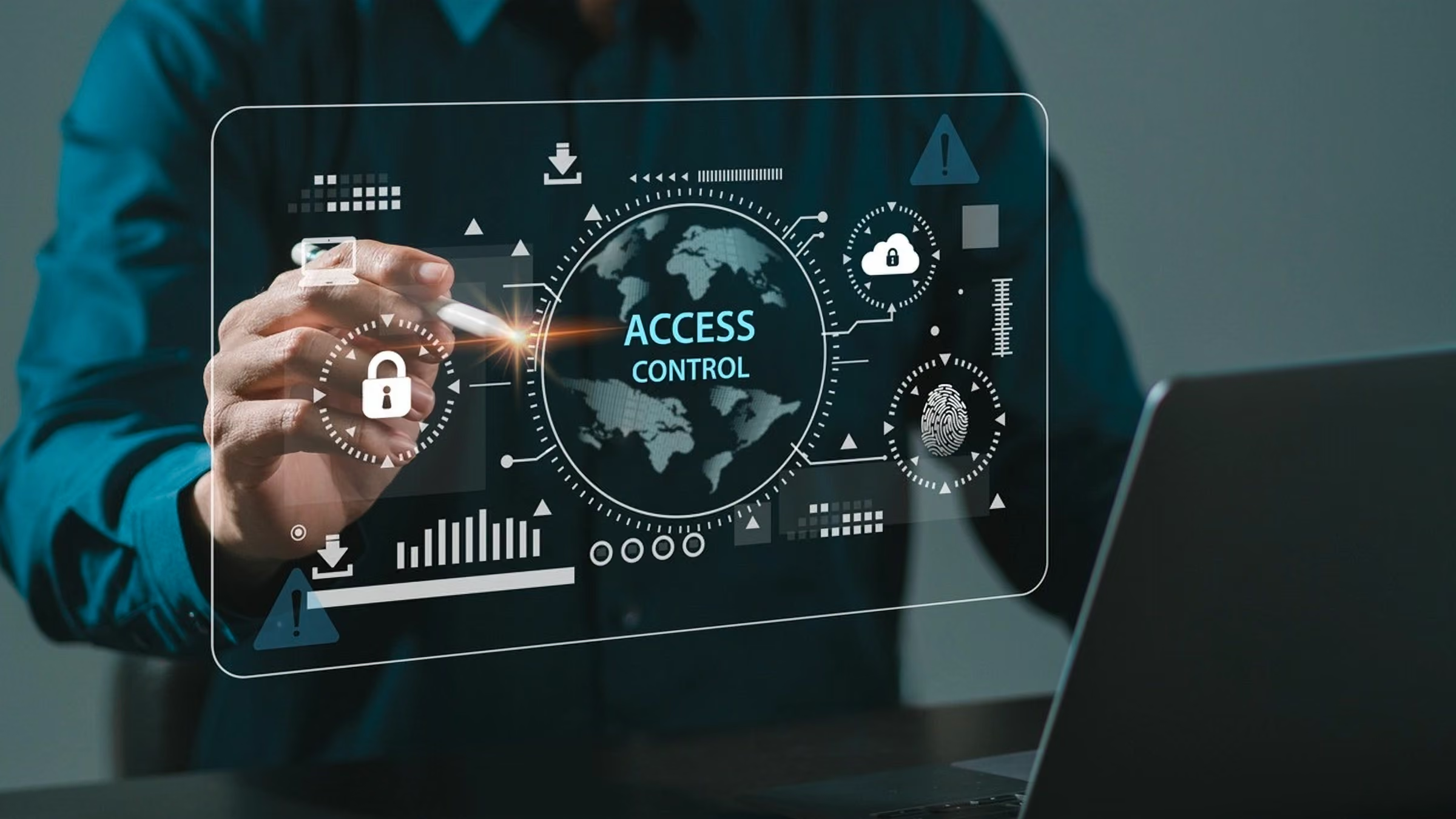
Take access control, for instance. Fully controlling who comes and goes is a more attainable goal than ever thanks to a number of advancements that warrant upgrading, like biometric identification and video monitoring synchronization. The same holds true with modern alarm systems, which have evolved from basic intrusion detection to include motion detection, glass break, monitors, and much more. You get the idea.
That’s not all. Security system providers with a deep bench of expertise can evaluate your existing infrastructure and recommend targeted upgrades that maximum protection within a unified system. With this approach, enhancements aren’t just added expenses, they become strategic investments in your organization's future.
3: Expertise in Cybersecurity & IT Integration
More than just another component, cybersecurity is its own separate priority. Updated frequently and varying widely from place to place — and yet still holding to certain universal standards — the rules around data protection require a deep understanding that comes from full dedication to the topic and not casual, surface-level knowledge.
On top of that, data protection protocols must be fully integrated with your other security functions, like access control and intrusion detection, as well as your larger IT networks. A provider that understands this will initiate early and ongoing dialogues with your IT department. They’ll also offer an advanced understanding of cybersecurity standards in all the jurisdictions you operate in today, and where you may be doing business tomorrow.
4: Expertise in Complementary Systems
Another way to ensure success is by choosing a service provider whose core capabilities include managing complementary systems that integrate seamlessly with security. For instance, an AV system expert can more readily provide the advanced, high-capacity monitoring that modern security often requires, while a leading structured cabling provider can help ensure uptime in your security networks as well as other essential systems.
This added expertise also helps ensure a seamless technical implementation. After all, the more separate networks a provider can manage, the better equipped they are to create, install, and maintain a fully modern, turnkey integrated security system. And their nationwide footprint helps ensure effective maintenance, scalability, and day-two support.
5: The Capacity for Comprehensive Day-Two Support
Security is an ongoing commitment. The technologies and systems behind modern solutions are not static — they are constantly evolving to enhance functionality and stay ahead of both human and automated threats seeking vulnerabilities to exploit.
Comprehensive day-two support is another key advantage of partnering with a recognized national provider. From routine maintenance to ongoing audits and system updates, this support ensures reliable uptime, no matter where your growth takes you.
- Pro tip: For an even higher level of service, choose a security systems provider that offers 24/7 support as well as ongoing, on-site training for your staff.
Meeting Your Organization's Modern Security Needs
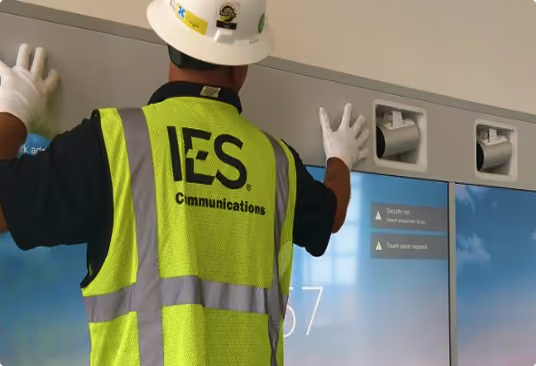
With decades of real-world experience and a nationwide footprint, IES Communications specializes in providing the expertise that modern security requires. Skilled, certified, and continuously trained, our technicians are prepared to design, install, and support security solutions tailored to your unique needs. Contact us now to get started.