With many of today’s meetings now happening virtually, ensuring that every member is engaged is more important — and more challenging — than ever. Here’s a quick definition of meeting equity, why it matters, and how it can be achieved (and improved) with expertly installed commercial audio visual (AV) systems.
> In need of professional, cutting-edge AV services? Contact us here
Achieving Meeting Equity & Why It Matters
At a time when fast and effective communication and collaboration are critical for productivity, meeting equity is more than a buzzword. It’s a mission-critical operational goal, and an essential consideration when installing audio visual systems. Here’s what you need to know about meeting equity, and why it rests largely on the quality of your AV system.
What Is Meeting Equity?
Meeting equity is defined as a situation in which every attendee of every meeting — regardless of location or role — has an equal ability to participate.
In other words, meeting equity describes an effort to design and run meetings in a way that puts everyone on equal terms. When meeting equity is achieved, every participant has an equal chance to see, hear, engage, contribute, be recognized, and feel valued.
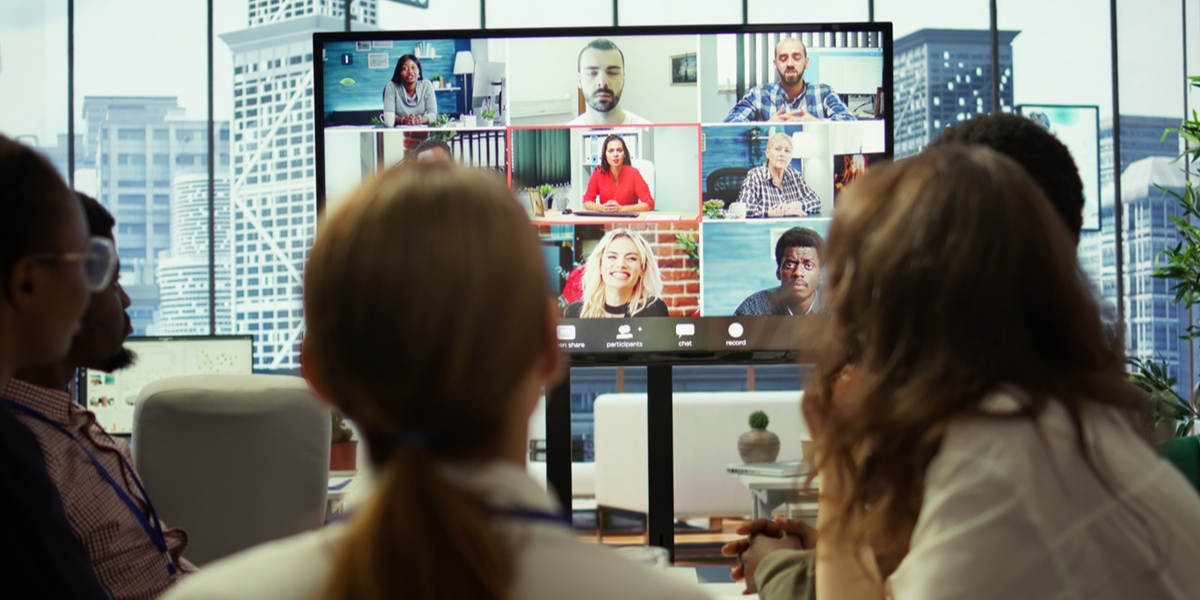
And that goes for everyone, even those who aren’t physically in the room — a major consideration in the era of the virtual meeting and hybrid workspace, when so many meetings include a combination of those who are remote as well as on-site.
Why Does Meeting Equity Matter More than Ever?
With the use of videoconferencing to connect hybrid teams now a standard part of doing business, meeting equity has emerged as a way to make sure those remote meetings are as collaborative and productive as possible.
And at a time when most teams are striving to maximize productivity, meeting equity has the potential to improve communication, decision-making, employee engagement and satisfaction, and general productivity — all of which can have real impact on any organization’s bottom line.
The Challenges of Achieving Meeting Equity
But if hybrid workplaces have made meeting equity more urgent, they’ve also made it more challenging to achieve. On top of making sure that each participant has access to the technology required to engage in each meeting, equity requires an effort to balance input and better manage time.
Of course, actual in-room participants have natural advantages in a hybrid meeting, not just when speaking but also in the use of body language, facial expressions, physical proximity, and other elements of nuance in communication. And this can be exacerbated if a meeting is held in a room that’s not designed for virtual participation, or by technology that struggles to accommodate virtual attendees.
So, achieving meeting equity is more than simple time management and engagement. Rather, it's a continuous effort to understand and offset the barriers to full participation, and make sure each attendee is engaged to their fullest potential.
7 Methods for Achieving Meeting Equity
Some of the ways that today’s leaders are meeting the challenge of meeting equity include:
- Setting a clear agenda and making it accessible in advance (i.e., with enough time to review and provide feedback)
- Adding breakout sessions for larger meetings, to give everyone the chance to engage
- Rethinking time management to make sure each participant has a full opportunity to weigh in on each discussion point
- Appointing rotating facilitators for each meeting to keep things on track and everyone engaged
- Replacing physical tools with digital versions, like chat or digital whiteboard apps
- Following up in an engaging way, with notes, action items, recordings, and a means to provide feedback
- Using professionally installed AV systems to ensure high-quality audio, video, and connectivity
How Commerical AV System Design Can Help Improve Meeting Equity
But even with all the tips above in place, meeting equity still depends on the technology that powers each meeting. And that means using the best, most up-to-date tech — and one way to do that is with expertly designed and installed commercial AV systems.
> What are AV systems, and what are they used for? Get a recap here
As we discussed in our look at AV installation, only commercial systems can really provide the high-quality audio and video required by today’s extensive use of videoconferencing, and reliably offer an experience that’s as free as possible from glitches, drops, and other barriers to full participation.
In addition, the experts that design and install commercial AV systems can take additional steps to ensure meeting equity, including:
- Multi-camera systems with intelligent framing or speaker tracking
- High-quality beamforming microphones and digital signal processing (DSP)
- Consistent display placement for people and content
- Strategic camera positioning to promote interaction
Professionally installed AV systems can help promote meeting equity in other ways, too. For instance, having a separate audio and video feed for each person is inherently empowering, and helps facilitate turn-taking and breakout sessions. It can also be easier to eliminate cross-talk, see a raised hand, and provided detailed notes, which can be generated automatically from recordings. And built-in timers can facilitate time management, too.
Promote Meeting Equity with Commercial AV Systems
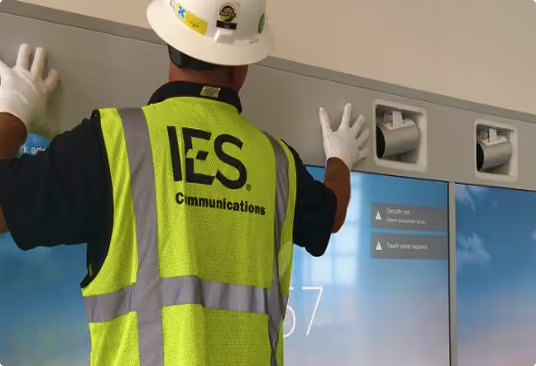
The bottom line? Improving meeting equity is key to boosting productivity and collaboration, and professionally installed commercial AV systems is an essential first step in achieving it. At IES Communications, we specialize in delivering exactly that, along with a suite of other integrated solutions. Contact us today to discover what our AV expertise can do for you.